Tourism Development, Management & Regulation
Venue
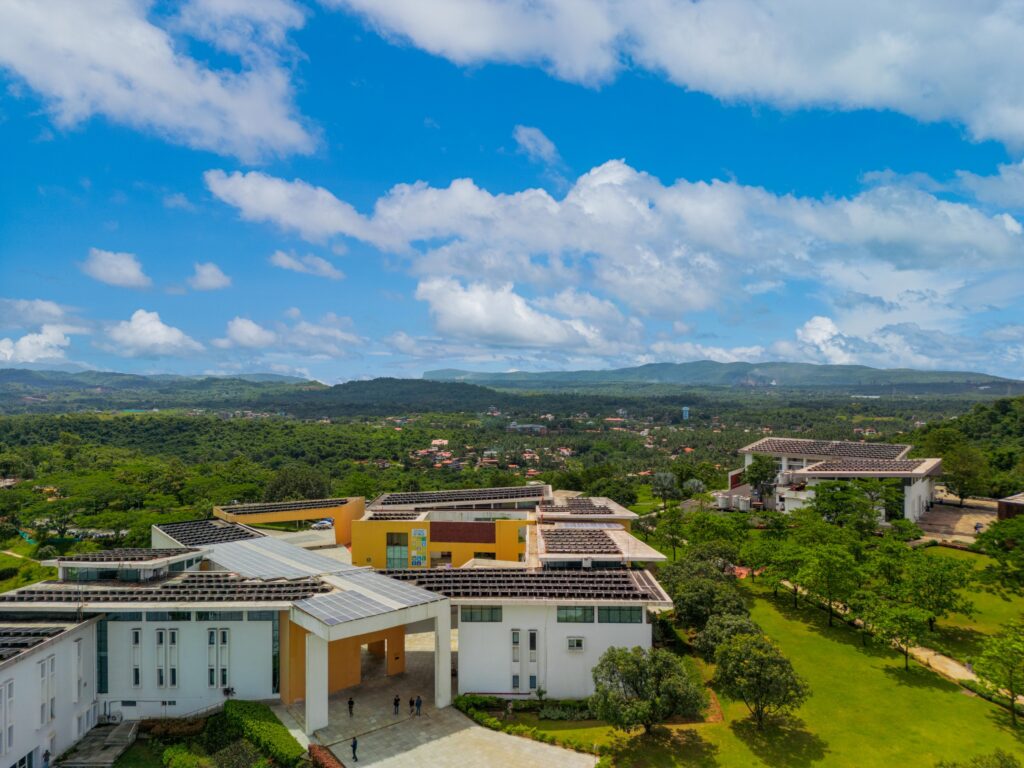
Goa Institute of Management, Goa, India
Event Date and Time
17th to 29th March 2026
Share
Follow us
Tourism is one of the larger sectors in most economies. Demands for tourism, travel, and hospitality have income elasticities greater than one at low to middle levels of income and rises thereafter. Consequently, many middle-income countries, particularly in Asia, show high growth rates of tourism. While tourism resources are often seen as being dependent on natural, cultural, and historical endowments, there is considerable scope to expand and improve the efficacy of existing resources through state action, and through new assets.
When tourism is excessive or mismanaged, concerns that it intrudes into the lives of locals can arise. Fragile natural resources would have to be carefully managed. Evidence from countries with capable governments suggests that well-designed development strategies allow significant expansion before the true limits of tourism are reached.
Although many tourism services, such as hotels, transport, tours, and circuits, are privately provided, the role of the state is central, as it bears responsibility for natural and cultural resources, coordination, access design, public amenities, regulation, promotion, and community interfaces. For some smaller economies, tourism revenues are very important.
Please refer for Brochure
Pedagogy
Cases, reports, readings, guided visits, besides interactive discussions.
Who can attend
Officials, developers, managers and operators of various segments of the business at senior and middle level positions
Course Content
- Tourism as a system: market segments, origin–destination linkages, circuits, logistics, and destination management arrangements.
- Technology and markets in tourism: the information revolution, changing demand patterns, and key drivers shaping tourism growth
- Macroeconomic dimensions of tourism: growth, employment, external balances, and tourism dependence in small economies. The role of the state, market, institutions, public private partnerships and regulation.
- Destination and national marketing: regional branding, digital platforms, role of industry associations.
- Conservation, heritage, and diversification: historical sites, wellness and medical tourism, diversification of resources, and ethical issues.
- Design thinking in tourism planning: site development, access, transport systems, coastal and water-based tourism.
- Managing sustainability and externalities: crowd management, wildlife tourism, fragile ecosystems, community participation, and social risks.
Faculty
Morris, Sebastian (Chair, CPPG – GIM) Sarkar, Kingshuk (Course Coordinator) |
To register, kindly fill the following google form:
https://forms.gle/NFYWL1phmqCytm7g7
Contact Persons
For any queries kindly contact:
Prof. Kingshuk Sarkar, Professor, and Member, CPPG, GIM
Email: kingshuk@gim.ac.in
Contact no: +91 9007704524; +91 8322366942
Ms. Bernice de Souza, Manager, CPPG, GIM
Email: bernice@gim.ac.in
Mb: +91 9923693329
Ms. Shruti Shirodkar, Executive, CPPG, GIM
Email: shruti.shirodkar@gim.ac.in
Mb: +91 8669160128